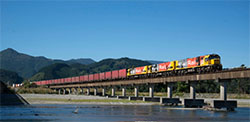
Greater Wellington Backs Increased Rail Use During Fuel Supply Crisis
Posted: 30-Apr-2026 |
Greater Wellington strongly supports the Minister for Rail’s call for increased use of rail to move freight during the current fuel supply crisis, particularly for heavy bulk goods such as logs.
Rail is one of the most fuel-efficient ways to move goods across Aotearoa New Zealand and plays a critical role in keeping supply chains moving when fuel is constrained.
Chair of Greater Wellington Daran Ponter says rail freight consumes significantly less diesel than road freight.
“On average, moving goods by rail is nearly four times more fuel efficient than moving by road. In a fuel crisis, that efficiency really matters,” says Cr Ponter.
In the Wellington Region, the freight rail network is closely linked to CentrePort Wellington, a strategic transport and logistics hub that plays a critical role in freight distribution between the North and South Islands and to and from overseas markets. From forestry and bulk commodities through to essential goods, rail provides a reliable and resilient backbone connecting regional producers to national and international markets.
“There is no question rail is essential national infrastructure. When we use rail for heavy and bulk freight, we reduce pressure on limited fuel supplies and keep goods flowing to where they’re needed most,” says Cr Ponter.
Using rail instead of road also protects New Zealanders from avoidable costs.
“Heavy freight causes disproportionate damage to our roading network. That leads to earlier and more expensive repairs, paid for by taxpayers and ratepayers. Shifting more freight to rail reduces that damage and lowers longterm maintenance costs,” says Cr Ponter.
The wide-ranging benefits of rail extend well beyond the current fuel challenge.
The Benefit of Rail to New Zealand, a report released by the Australasian Railway Association, estimates rail delivers $3.3 billion in benefits every year to New Zealanders, including reduced congestion by taking cars and trucks off our roads, lower greenhouse gas emissions and air pollution, improved road safety, with fewer injuries and fatalities, lower road maintenance costs for taxpayers and ratepayers, fuel savings and a contribution of $1 billion to GDP.
“These benefits only grow as investment continues into the rail network. With significant government funding supporting rail upgrades, the opportunity is there to move more freight and passengers efficiently, safely, and sustainably,” says Cr Ponter.
The current fuel pressures highlight why longterm shifts toward both freight and passenger rail are not just environmentally responsible, but economically smart and essential to national resilience.
Greater Wellington has also asked the Government to prioritise passenger rail services during the fuel crisis, recognising the role rail plays in keeping people moving when fuel availability is uncertain.
“Passenger rail is critical to maintaining access to jobs, education, health services, and essential activities. Prioritising passenger services reduces pressure on fuel supplies, keeps congestion down, and supports those who rely on public transport most during times of disruption”.
“Rail helps keep New Zealand moving when conditions are toughest. That’s something worth backing — now and into the future and whether there is a fuel crisis or not,” adds Cr Ponter.
Search Articles
Search Trucks Database
NZ Truck & Driver Magazine
Read Now


 + EQUIPMENT GUIDE - FREE