TDDA - Overall drug detections rise nationally, cocaine detections up 148%
Posted: 26-Feb-2026 |
The Drug Detection Agency (TDDA), New Zealand’s largest workplace drug testing provider has launched its Q4 Imperans Report, a quarterly workplace drug trends report. The report empowers New Zealand employers to engage in proactive workplace risk management. It provides them with an analysis of drug and alcohol usage trends, combining results from across the country.
In Q4, 4.01% of screens conducted by TDDA indicated the presence of drugs (Q3: 3.75%).
Cannabis remains the most prevalent substance detected in workplace drug testing, although detections eased in many regions following a Q3 peak. ATS detections were up nationwide in Q4, representing a modest quarter-on-quarter increase. Cocaine detections, while remaining comparatively low overall, jumped 148% from the previous quarter.
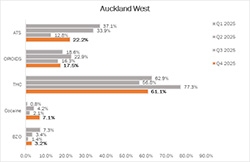
The data points to three broad shifts in substance use patterns nationwide. Increasing regional divergence in amphetamine-type substances (ATS), easing THC (Cannabis) detections after a Q3 peak, and a concerning rise in cocaine, significantly in Bay of Plenty, Auckland West and Waikato.
“We warned employers in previous quarters that cocaine use was increasing across the nation, and Q4 data shows that this trend nearly doubled over the festive season,” says Glenn Dobson, CEO of TDDA. “This increase was particularly evident in Bay of Plenty, Auckland West, and Waikato. Businesses in the Bay of Plenty area need to take action immediately, as cocaine detections, which barely registered previously, rose to 9% of positive tests. Cocaine causes overconfidence, reduces focus and concentration, correlates with bad judgement and causes erratic behaviour. If you’re doing business in an affected region, employee education and testing are immediately advised. There’s significant risk for businesses with heavy machinery, you don’t want your workers operating chainsaws while on cocaine.”
Q4 data shows that drug trends are increasingly diverging by region, rather than moving in a single national direction. ATS recorded sharp increases, particularly in Auckland West, Gisborne, Hawke’s Bay, Northland, Southland, and Wellington, while easing in some areas including Canterbury, Manawatū-Whanganui and Taranaki. At the same time, cannabis detections declined in many regions after peaking in Q3, although some areas, including Gisborne and Canterbury, experienced a bounce-back. Opioids use also increased across multiple regions, especially in Otago, Taranaki, Tasman and Wellington, reinforcing the need for closer monitoring.
“What this data reinforces is the need to stay proactive,” says Dobson. “As the year gets underway and businesses recruit, onboard new staff, or adjust workforce needs, clear expectations become critical. Fit-for-purpose substance use policies, supported by pre-employment testing, regular testing programmes, and ongoing training and education, help organisations manage risk early and prevent issues from arising on the job.”
Recommendations - “When growth in detection continues across successive quarters, or when drug trends change significantly, it’s a signal employers shouldn’t ignore,” says Dobson. “As summer months continue past the holidays, the priority is stopping trends from becoming established behaviours in your workplace. That requires clear expectations through policy, consistent testing, and early intervention, particularly as people move into new roles or return to work after long weekends.”
TDDA recommends that companies review and update substance use policies at the start of the year, ensure pre-employment testing is clearly embedded into recruitment processes, and maintain regular and random testing programmes. Employers are also encouraged to invest in training and education, so managers feel confident identifying when testing is appropriate, particularly following extended leave periods or during onboarding.
With people moving between roles and workplaces, a proactive approach to policy review, pre-employment testing, and workforce education can help employers reduce risk, protect their people, and maintain safe workplaces throughout the year.
Search Articles
Search Trucks Database
NZ Truck & Driver Magazine
Read Now


 + EQUIPMENT GUIDE - FREE