What driving half a billion kilometres on New Zealand roads has taught us about driver fatigue
Posted: 17-Jul-2026 |
According to Autosense CEO Charles Dawson, the Road Freight Update at Transporting New Zealand's recent 60th Anniversary Conference provided an opportunity to reflect on how our understanding of driver fatigue is evolving.
AutoSense was proud to support the report because it brings together many of the same lessons we've learned while working alongside fleets across New Zealand. Drawing on insights from our own Guardian Insights Report 2025/26, which captures driving behaviour recorded in 6,098 vehicles that have completed almost half a billion kilometres of commercial driving, we've come to understand that fatigue is far more complex than many of us once believed.
The report highlights an encouraging trend. New Zealand Transport Agency data shows fatigue-related fatal crashes have declined steadily over the past four years. That's a positive reflection of the transport industry's commitment to improving road safety. Yet fatigue still contributed to 11 fatal crashes and 71 serious non-fatal crashes in 2025[1], reminding us there is still much more to do.
For many years, fatigue management quite rightly focused on work-time rules, mandatory breaks and ensuring drivers had opportunities to rest. Those safeguards remain fundamental. But experience tells us they are only part of the solution.
The reality is that fatigue begins long before someone gets behind the wheel. It develops through disrupted sleep, changing routines, underlying health conditions, operational pressures and the cumulative demands of everyday life. By the time a driver shows obvious signs of fatigue, the contributing factors have often been building for days.
Perhaps the biggest shift in our thinking is recognising that fatigue is not a sign of poor judgement or a lack of professionalism. In our experience, it often affects highly experienced, conscientious drivers who simply don't realise how their alertness has changed. That's why the conversation is moving beyond compliance and towards understanding the human factors that influence safety.
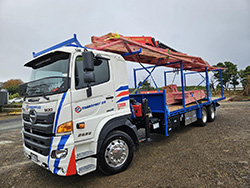
One of the strongest examples featured in Transporting New Zealand's report is Auckland transport operator VT Transport. As part of its proactive approach to fatigue management, the company uses Guardian by Seeing Machines technology to better understand fatigue risk and support conversations with drivers about their wellbeing. In one instance, those insights led AutoSense Fatigue and Sleep Specialist Katrina Aubrey to identify a driver’s previously undiagnosed sleep apnoea. Following treatment, the driver experienced no further fatigue events - demonstrating how early intervention can improve both health and safety outcomes.
The example illustrates how the right technology, combined with a supportive workplace culture, can improve both driver wellbeing and road safety.
Technology will continue to play an increasingly important role in fatigue management, but it isn't the whole answer. The fleets making the greatest progress are those that combine data with education, supportive leadership, thoughtful rostering and open conversations about wellbeing. They recognise that technology can identify risk, but it's people who ultimately manage it.
That represents an important shift for our industry. Fatigue management is no longer just about complying with the rules. It's about understanding the people behind the wheel and creating workplaces where they can perform at their safest
After almost half a billion kilometres on New Zealand roads, that's perhaps the most important lesson we've learned.
Search Articles
Search Trucks Database
NZ Truck & Driver Magazine
Read Now


 + EQUIPMENT GUIDE - FREE